Dungog’s much-loved ‘Hospital Hill Red Gum’ safe.
A strong show of community support helped deliver an important result at the Dungog Shire
Council meeting on Wednesday 19 August, when Councillors supported measures aimed at protecting Dungog’s much-loved Hospital Hill Red Gum.
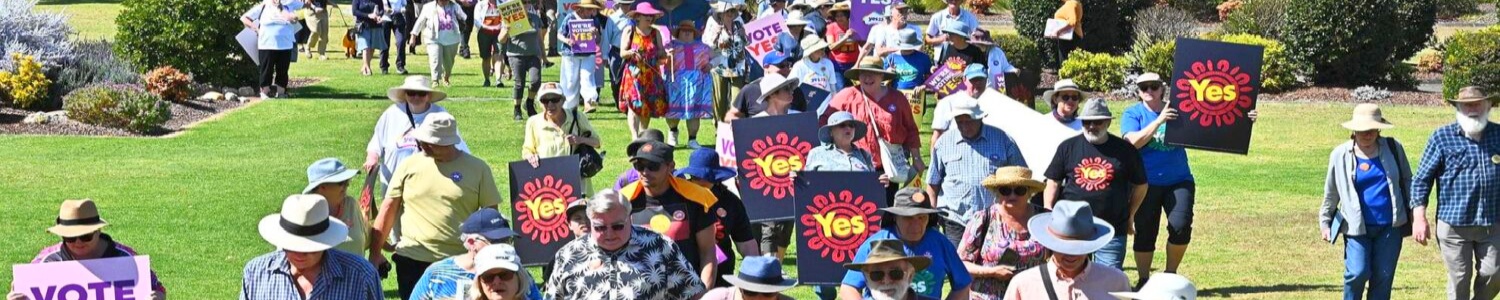
Representatives from Lyne Together, Sustaining the Williams Valley Inc, the Women’s Climate Congress, Dungog Commoners Landcare and the CWA, along with many other members of the community, attended Council’s Public Access Forum in support of Lyne Together volunteer Lyn Everingham, who presented on the significance of the hospital tree to the Dungog community.
More than anything, the Hospital Tree campaign demonstrates what can happen when people come together around an issue they care about.
Community organisations worked alongside residents, hundreds of people supported the campaign, Councillors received numerous emails and submissions, and community members turned up to make their voices heard.
More than just a tree
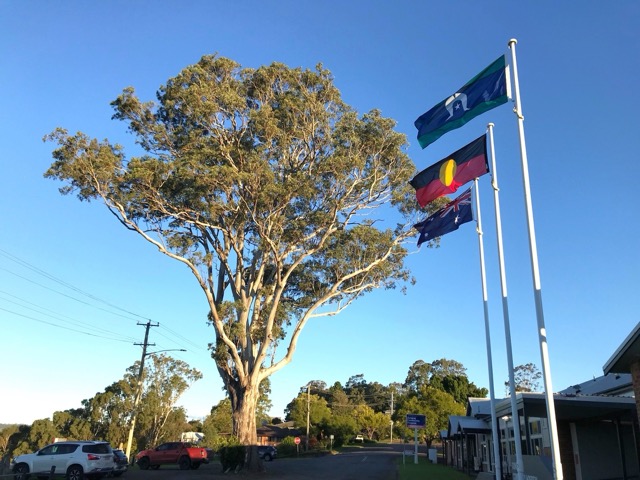
The Hospital Hill Red Gum is estimated by Sustaining the Williams Valley to be more than 300 years old and has long been a familiar landmark for generations of Dungog residents.
It is believed to be a Slaty Red Gum (Eucalyptus glaucina), a species listed as threatened (vulnerable) under the Commonwealth Environment Protection Act and the NSW Biodiversity Conservation Act. Its age and size also make it particularly valuable habitat, with its flowers and hollows supporting native birds, mammals and other wildlife. Once a mature tree of this age is lost, it cannot be replaced within our lifetime.
For many residents, the tree is part of the town’s living history. It was once known as Dungog’s Christmas tree, and its distinctive presence on Hospital Hill has made it an enduring part of the local landscape. Quote from a hospital staff member ‘This tree is iconic to the staff and patients who enjoy families of many nesting bird varieties. It helps them get better sooner!’
Council will continue investigating the costs and feasibility of different options for the Hospital Road Dungog – Mackay Street to Scott Avenue capital works program, including alternative parking arrangements and road layouts that protect the Red Gum and its root zone.
Importantly, the Motion requires the available options to be brought back to Council for consideration and adoption before any works commence.
We would particularly like to thank the more than 190 people who supported our petition, together with everyone who contacted Councillors, attended meetings, shared information or helped build awareness of what was at stake.
More to come:
The Council decision is a very positive outcome. Promisingly, it can also be the beginning of something bigger: a community-led effort to identify, celebrate and protect the mature trees that help make Dungog such a special place to live.
If you know of a significant mature tree in Dungog township or the surrounding district, we would love to hear from you.
Over the coming months we will be inviting residents to nominate trees for inclusion in the proposed Significant Mature Trees List and Map, and there will be opportunities for community members to help with identification, mapping, photography and local history.
Coomba Park and Shallow Bay locals unite to defeat a DA for quarry in Shallow Bay
Around 20 residents of Coomba, Shallow Bay and District spent a day at Yalawanyi Ganya on Wednesday 29 July, representing the overwhelming number of residents who have for the last year have worked to oppose a DA proposal for a quarry in the special natural environment of Shallow Bay.
The unprecedented 123 formal objections to the DA and support of the Coomba Progress Association (CDPA) demonstrated the level of community concern and opposition, and what an effective grassroots campaign can achieve.
The Council report agreed with community concerns about traffic, road degradation, safety impacts on rural roads and intersections inadequate for heavy truck movements.
It also supported community concerns about the environmental impacts of vegetation removal and other indirect impacts (such as noise and air pollution) and incompatibility with existing land uses and the yet-to-be-gazetted new LEP.
The Community Spokesperson and Lyne Together volunteer, Julie Brady, exhorted Councillors to:
- be mindful of how future generations would view their decision
- prevent ongoing noise and light pollution harming wildlife and habitat
- secure the safety on our local rural roads for generations of Coomba and Shallow Bay kids, and hundreds of residents.
This is a great example of how community cooperation and joint action can be effective. Not only did we build an effective local network, but we now have a blueprint for how we can deal with future issues of concern for a local community.